Selling to Overseas Customers Before Becoming an Export Business
Many micro-businesses and small producers believe they must first build a complete export organization before they can accept any overseas order. In practice, selling overseas before becoming an export business is both possible and often the smarter path. How to sell internationally as a small business begins with controlled experiments rather than with full departmental infrastructure.
How to Start Selling Internationally Before Building a Full Export Business
How to sell internationally as a small business does not require an immediate formal export department. Selling overseas before becoming an export business allows micro-enterprises to validate demand, learn operational realities, and generate early revenue while remaining lightweight. Start selling internationally at small scale creates real experience that later informs whether and how to professionalize. International sales for small business can begin with individual transactions long before warehouse networks, dedicated compliance teams, or complex ERP systems appear. Global selling for micro businesses succeeds most often when the seller treats the first overseas orders as learning opportunities rather than as the launch of a full export division. The formal export organization can remain a later destination; it does not have to be the starting point.
A practical illustration involves a small artisanal studio in the Western Cape producing handcrafted rooibos skincare items and botanical candles. The owner began fulfilling occasional overseas requests through express courier services while still operating as a local craft business. Only after repeated successful transactions and clear demand signals did the studio invest in more formal processes. Analysis of the path shows that selling overseas before becoming an export business reduced financial risk and produced practical knowledge that a purely theoretical preparation phase could not have supplied.
A deeper examination of the “destination versus starting point” mindset reveals its strategic importance. Treating full export infrastructure as a prerequisite creates a high activation barrier that stops many capable micro-businesses from ever beginning. Treating it as a possible later stage allows progressive capability building funded by actual orders. This sequencing is central to sustainable how to sell internationally as a small business approaches.
Start With One Product, One Customer and One Market
Start selling internationally becomes far more manageable when scope is deliberately limited. Selecting one product (or a very narrow product family), one primary customer type, and one target market reduces the number of variables that must be controlled at once. First international customer interactions stay focused, documentation requirements remain clearer, and feedback is easier to interpret. International sales for small business that attempt to serve multiple markets and many product variants simultaneously often generate confusion and inconsistent execution. Direct to overseas customers works best in the early phase when the seller can give concentrated attention to a single commercial relationship. Global selling for micro businesses gains traction through depth in a narrow lane rather than through scattered breadth.
Consider a boutique producer of specialty dried fruit and macadamia snacks based in Mpumalanga. They chose a single packaged gift line, targeted individual consumers in one regional or European market (such as the UK), and fulfilled orders via express courier. The constrained scope allowed rapid learning about protective food packaging, customs tariff codes, and buyer queries. Expanding product range or geography only after these fundamentals stabilized produced cleaner growth. The example demonstrates why controlled scope is a practical foundation for start selling internationally.
Check the Minimum Compliance Needed Before the First Sale
Even small transactions require a baseline of compliance. Start exporting small quantities still demands verification that the product may legally leave South Africa and enter the destination country. Phytosanitary checks, labeling rules, ingredient restrictions, and product-specific safety requirements must be verified. Customs description accuracy and valuation honesty remain mandatory. Payment method legality and basic tax implications (such as VAT considerations and SARB exchange controls) should be understood. Sell abroad with small orders does not create a compliance-free zone. International sales for small business that ignore these minimum checks risk shipment delays, returns, or legal exposure. Completing a focused pre-sale review protects both the first international customer experience and the seller’s ability to continue.
One South African micro-business preparing to ship handcrafted ceramic homeware discovered a destination labeling and materials declaration requirement only after the first order was already packed. The resulting delay and rework consumed the entire margin on that sale. After implementing a simple pre-acceptance checklist, subsequent orders proceeded without similar disruptions. The incident shows that minimum compliance work is an essential part of sell abroad with small orders rather than an optional extra.
A deeper look at the “minimum viable compliance” concept is useful. The goal at the earliest stage is not exhaustive legal perfection across every possible regulation; it is the identification and satisfaction of the non-negotiable requirements that would stop the specific product from reaching the specific customer. This focused standard keeps preparation proportional to current scale.
Choose a Simple Cross-border Selling Model
Direct to overseas customers can be executed through several lightweight models. Courier-based direct shipping of finished goods suits many physical products. Made-to-order or pre-order approaches reduce inventory risk while still enabling international sales for small business. Buyer-specific Offers allow precise commercial terms for each transaction. These models avoid the complexity of establishing overseas inventory or formal distribution agreements at the outset. How to sell internationally as a small business is often easiest when the chosen model matches current operational capacity. Global selling for micro businesses remains sustainable when logistics and payment processes stay simple enough to manage without dedicated staff. Selecting an appropriately light model prevents early international activity from overwhelming the core business.
A clear case involved a maker of custom leather boots in Gauteng. Instead of holding stock for overseas demand, the maker accepted made-to-order requests, manufactured after payment confirmation, and shipped by express courier. The model required no additional warehouse space and generated positive cash flow on each order. This approach illustrates a practical direct to overseas customers pathway that supports start selling internationally without heavy fixed costs.
Keep Your First International Transactions Documented
Documentation protects both parties and creates an institutional record even at micro scale. Product specifications, agreed price, delivery terms, payment confirmation, key communications, and proof of shipment should be retained for every first international customer transaction. Global selling for micro businesses benefits from this discipline because memories fade and personnel may change. Clear records also simplify any later customs inquiry or customer question. International sales for small business that leave terms only in scattered chat messages create avoidable ambiguity. Maintaining basic documentation from the first order builds habits that later scale into more formal export processes.
One seller who had relied solely on chat history struggled to reconstruct exact terms when a delivery dispute arose months later. After adopting a simple practice of summarizing each agreement in a single document and archiving shipping proofs, subsequent transactions became far easier to administer. The change demonstrates the practical value of documentation even while still selling overseas before becoming an export business.
Learn From Each Small International Order Before Scaling
Every completed order supplies data. Lead times, actual shipping costs, customs experiences, buyer questions, complaint patterns, and reorder signals all contain information. Sell abroad with small orders generates the most useful learning when the seller deliberately captures and reviews these elements. Start exporting small quantities should therefore include a short post-order reflection. International sales for small business improve fastest when each transaction informs the next rather than remaining an isolated event. Global selling for micro businesses becomes more professional through accumulated, reviewed experience than through large leaps based on assumptions.
A producer of beaded fashion accessories tracked five variables after every overseas shipment: true door-to-door cost, transit time variability, frequency of buyer questions, any damage or dissatisfaction, and likelihood of repeat purchase. After twelve orders the producer adjusted packaging, pricing, and product descriptions with confidence. The systematic learning converted early sell abroad with small orders activity into a more robust process.
Why MultiMe Lets Micro Businesses Start Global Selling Without Building a Complex Website or Sales Stack
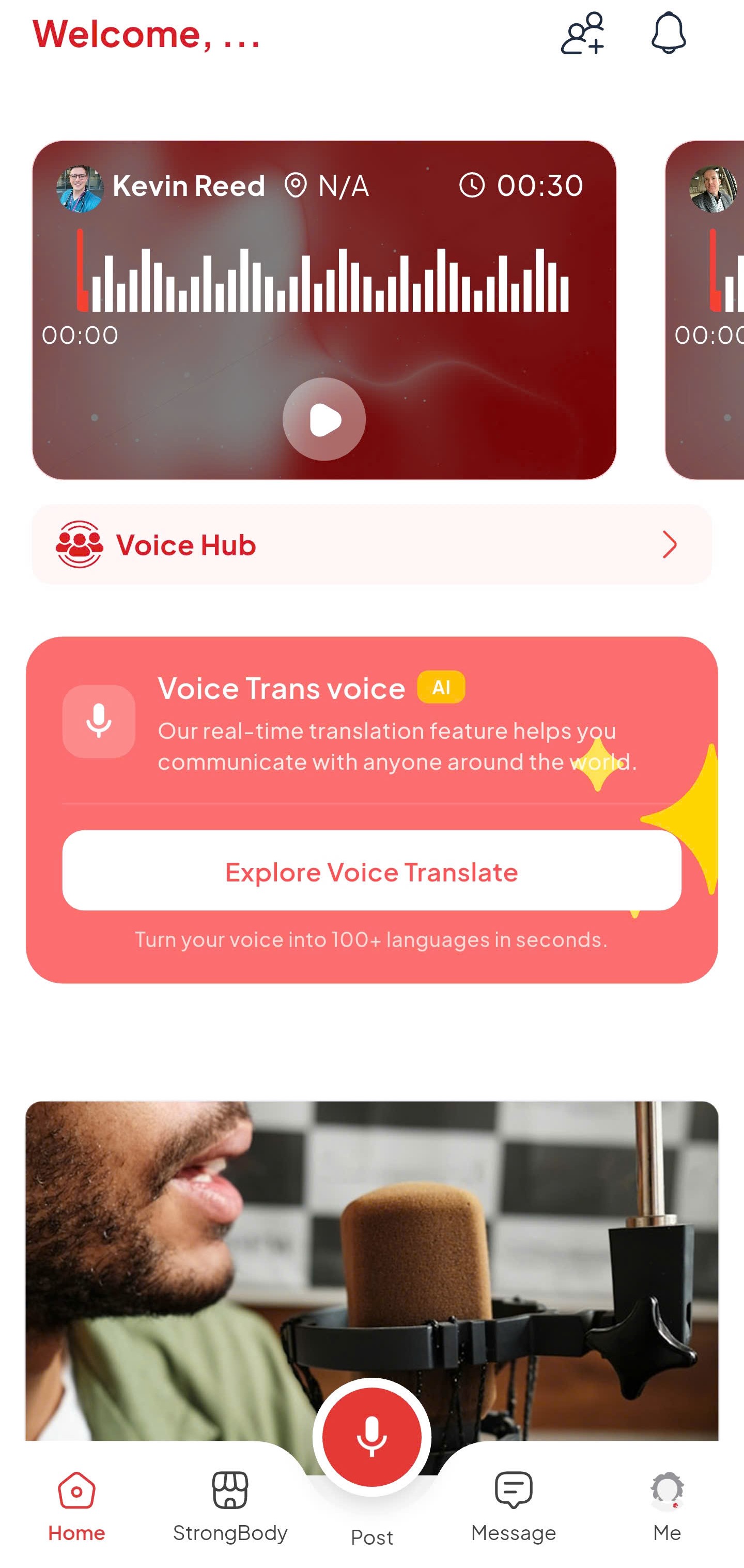
MultiMe is designed around a lightweight commercial sequence that matches the needs of sellers who are still selling overseas before becoming an export business. Expert-Shop functions as a professional presence that does not require a separate website or elaborate digital infrastructure. The core flow—Present → Be Discovered → Connect → Offer → Book → Get Paid—allows a micro-business to display capabilities, enter conversations, issue personalized Offers, and receive payment inside one environment. How to sell internationally as a small business becomes more accessible when the seller does not first have to assemble a CRM, independent quotation system, payment gateway, and marketing site. Global selling for micro businesses can therefore begin with actual demand conversations rather than with technology projects. Start selling internationally is reduced to finding relevant opportunities and executing clear Offers. This architecture lowers the barrier between local capability and first international revenue.
A closer examination of the Expert-Shop logic shows its fit for early-stage sellers. The shop concentrates the essential professional information a buyer needs—who the seller is, what they offer, and how to begin a transaction—without demanding the maintenance burden of a full independent website. This concentration of function supports progressive international activity while the core business remains small.
Use MultiMe Requests and Business Match to Find Your First International Customer or Partner
MultiMe provides two complementary paths to the first international customer. Requests surface demand-led opportunities: buyers describe needs, and sellers who can meet those needs respond with tailored Offers. Business Match supports partner-led opportunities by helping users locate potential distributors, agents, or commercial collaborators. International sales for small business can therefore proceed through direct customer conversations or through early partner relationships. Direct to overseas customers is facilitated by the Request–Chat–Offer sequence. Sellers are not limited to posting products and waiting; they can actively seek matching demand or suitable business connections. First international customer acquisition becomes a proactive process rather than a purely passive one. This dual mechanism accelerates the transition from zero overseas revenue to validated international transactions.
FAQs about Selling Overseas Before Becoming an Export Business
Is it realistic to start selling internationally without a formal export department?
Yes. How to sell internationally as a small business often begins with individual transactions and simple logistics. Selling overseas before becoming an export business is a common and practical path for micro-enterprises.
What is the safest way to begin global selling for micro businesses?
The safest way is to limit scope to one product, one customer type, and one market while completing minimum compliance checks and documenting every transaction carefully.
Do small orders still require compliance work?
Yes. Start exporting small quantities still requires verification of product legality, destination requirements, accurate customs information, and basic tax or payment considerations.
How does MultiMe support sellers who are not yet formal export businesses?
MultiMe provides a lightweight Expert-Shop presence and a Connect → Offer → Payment flow that enables real international transactions without a separate website or complex sales stack.
When should a micro-business consider moving beyond pure direct sales?
A micro-business should consider more formal structures when order volume becomes recurring, professional buyers appear, logistics complexity rises, or compliance and tax obligations increase materially.
Don't wait until you have a full export department. Prepare one product correctly, complete the minimum compliance checks, and use MultiMe to discover real international demand through Requests or Business Match. Execute clear Offers, document each transaction, and extract lessons before expanding. Build export capability one successful transaction at a time rather than attempting to construct the entire organization in advance.
Read Next
How Small Businesses Can Test International Markets Before Exporting